
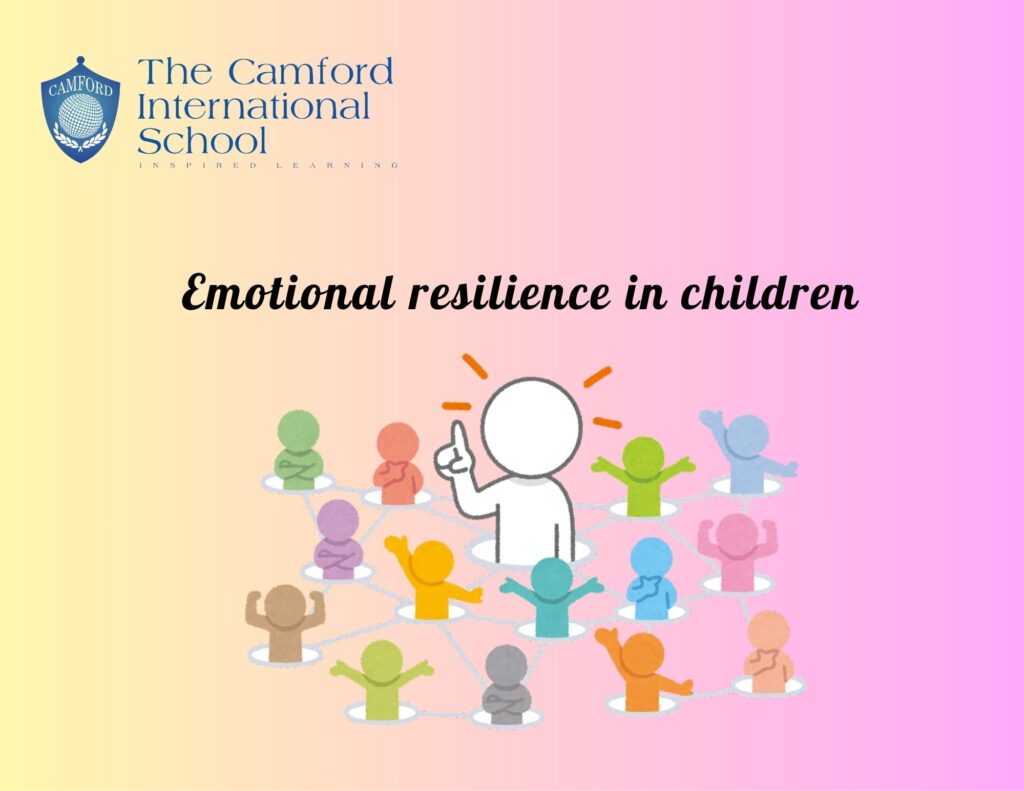
Emotional resilience in children is not an inborn trait. It is a quality that needs to be built and nurtured with care and patience. The goal should be not to shield kids from challenges, but instead to equip them with the confidence and resolve to face them. While academics are important, what truly matters for an individual is emotional resilience, which will equip them with the maturity to handle both success and failure, and stay balanced in life’s ups and downs.
Say goodbye to fear of failure
The mere mention of the word ‘failure’ is enough to set off a chain of negative thoughts in the mind. This is particularly so in the younger age group. It is therefore important that parents and teachers teach them that failure is, at the end of the day, part of success. It is not something to be feared. Instead, guide them to learn from failures. Emotional resilience in children is gradually developed through this positive approach.
No comparisons please
The worst thing that we can do as parents to dent our kids’ confidence is to compare them with others. Saying something like “How is it that your classmate excels in Maths, while you don’t?” is not going to motivate them, but only increase their insecurity. Every child born on this planet has a unique set of talents. Parents need to encourage their students to realize their potential, instead of constantly comparing them with others. Even a few words of appreciation for any good work done by them means the world to them and will definitely spur them on towards bigger achievements. This encouragement plays a major role in building emotional resilience in children.
Guide them on problem-solving
As parents, it is but natural that we want our children to be happy always and not face any difficulties. However, remember that over-protection can also make them emotionally fragile. The solution, therefore, is to guide them in problem-solving. If they are faced with a difficult situation, ask them, “What do you feel is the solution?”
Similarly, guide them on the different ways in which a problem can be solved. Encourage them to come up with ideas. Stand by their solutions when you feel that they are sensible and safe. All this will help build their confidence and help them grow into emotionally resilient adults. Such practices are essential for strengthening emotional resilience in children.
Open communication channels
One can often find kids unable to openly speak about their innermost emotions for fear of being judged or punished. This could happen both at their home and at school. This is something that, as parents and teachers, we need to consciously recognize. By bottling up emotions inside, their stress levels are only going to increase.
Let’s remember, they are, after all, children. They need guidance. So instead of getting angry at them, let’s do some positive things, such as:
Spending at least some time with them daily.
Giving them an uninterrupted and patient hearing, without passing any judgment.
Guiding them in improving their critical thinking and problem-solving skills.
Telling them that you are proud of your children and are always there to help them.
These small efforts can greatly improve emotional resilience in children and help them feel emotionally secure.
Guide them on stress relief
There are some simple tips that you can give to your kids to relieve stress.
Play is perhaps the best stress reliever.
Simple Yoga stretches and deep breathing exercises can help calm their mind and improve emotional stability.
Journaling their thoughts is a good way to let go of negative thoughts.
Spending some time in nature, in a park or a garden, is a great stress-buster.
These healthy habits contribute significantly to developing emotional resilience in children.
Be a role model for emotional stability
Children always learn by observing their parents. So, try to be the perfect role models that you could be for them.
Model gratitude, whether it is with shopkeepers, service staff, neighbours, teachers, etc. This will help teach children about the virtues of thankfulness.
Model positivity, avoiding any kind of negative talk. Show resilience even during times of hardship, which will send the right kind of message to your children.
Model appreciation, always praise others for any good deed or achievement. This helps kids develop a positive outlook.
Positive parenting habits are key to nurturing emotional resilience in children.
Give them responsibility
Teaching responsibility could begin with something as simple as establishing a routine that everyone at home needs to follow. You can also ask for their help in some age-appropriate chores, such as arranging their clothes neatly, packing their lunch, or watering plants in the garden. The sense of responsibility derived from these simple chores will stay with them into their adulthood, shaping them into responsible and self-reliant individuals.
At the school, a lot of emphasis is laid on developing the self-belief and confidence of students. Through supportive mentoring, guidance, and a variety of activities, we nurture their ability to face challenges with positivity and strengthen emotional resilience in children. Discover more about what makes us a preferred CBSE school in Coimbatore by speaking to our admission officers today @ https://thecamford.org/contact/